
Cape Town removes ECSA professional sign-off for qualifying SSEG under 100 kVA
The City of Cape Town says an ECSA-registered professional no longer has to sign off SSEG systems below 100 kVA in categories A1 and A2. This removes one step for many residential and smaller commercial installations—but it does not remove City authorisation or electrical compliance duties.
THE KEY CHANGE
One sign-off requirement has changed. The compliance process remains.
The City describes the change as effective immediately. A precise publication date was not shown in the reviewed notice, so applicants should confirm how the change applies to an application already in progress.
What remains compulsory
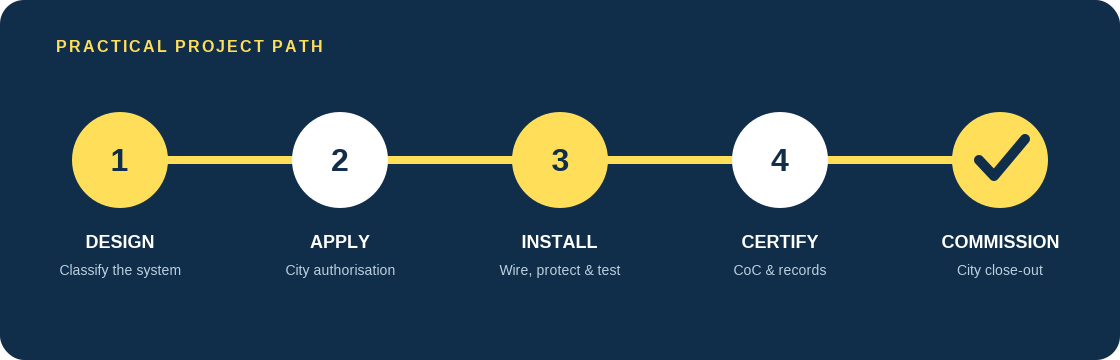
- Apply to the City and obtain the required SSEG authorisation.
- Select an inverter on the City’s current approved-equipment list.
- Install and test the electrical work correctly and issue the applicable Certificate of Compliance.
- Submit the drawings, equipment information and commissioning records required for the project.
- Meet the relevant meter, tariff and export-control requirements.
Important transition warning
Some older wording on the City’s own information page still refers to an ECSA professional signing the commissioning report. Until every City document is aligned, do not guess: confirm the document set for pending or new applications with ElectricityApplication.Queries@capetown.gov.za.
Metering and export rules have not disappeared
Feed-in system
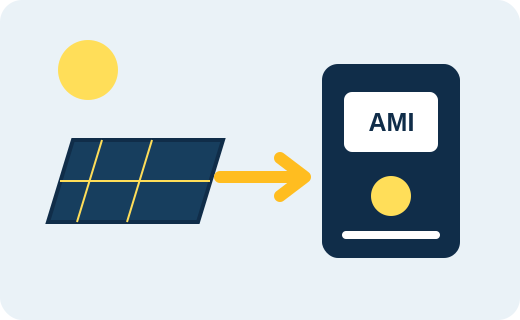
An approved AMI meter and the applicable tariff arrangements remain relevant where energy is exported to the City network.

Non-export system
Where export is not permitted, the required reverse-power-flow blocking or approved export limitation must be correctly designed, set and verified.
Approved inverter list
The City’s linked approved photovoltaic inverter list is dated 11 September 2026. Check the exact manufacturer, model and variant before equipment is ordered—similar product names are not enough.
Practical actions before the next installation
- Classify the system first. Confirm the SSEG category, capacity, export arrangement and supply type.
- Check the exact inverter. Verify the model against the latest City list before quoting or purchasing.
- Confirm the application pack. Ask the City what it expects where older and newer instructions differ.
- Keep the technical file complete. Retain the CoC, test results, settings, schematics, data sheets and commissioning records.
- Train against current requirements. Visit RSA Electrical Training for Installation Rules Paper 1 and Paper 2 preparation.
Official sources
City of Cape Town: Apply for authorisation to install an embedded generation system ↗
City of Cape Town: Approved photovoltaic inverter list (PDF) ↗
This article is a practical summary, not a substitute for the applicable standard, legislation or a project-specific City decision. Requirements and linked documents can change.PLANNING A SYSTEM?